Our Story

OUR STORY

Delta Sigma Theta Sorority, Incorporated is an organization of college-educated women committed to the constructive development of its members and to public service with a primary focus on the Black community.

Delta Sigma Theta Sorority, Incorporated is a private, not-for-profit organization whose purpose is to provide assistance and support through established programs in local communities throughout the world. Since its founding, more than 300,000 women have joined the organization. The organization is a sisterhood of predominantly Black, college-educated women. The sorority currently has over 1,000 collegiate and alumnae chapters located in the United States, Canada, Japan (Tokyo and Okinawa), Germany, the Virgin Islands, Bermuda, the Bahamas, Jamaica, the Republic of Korea, the Arabian Gulf, Southern Africa and West Africa.

The major programs of the Sorority are based upon the organization’s Five-Point Programmatic Thrust:

  • Economic Development
  • Educational Development
  • International Awareness and Involvement
  • Physical and Mental Health
  • Political Awareness and Involvement


For more information, visit our national website at www.deltasigmatheta.org.

Woman Suffrage March of 1913

“We marched that day in order that women might come into their own, because we believed that women not only needed an education, but they needed a broader horizon in which they may use that education. And the right to vote would give them that privilege.”

Founder Florence Letcher Toms,
WDCAC Charter Member

The Washington DC Alumnae Chapter of Delta Sigma Theta Sorority, Inc. stands as a beacon of service, sisterhood, and scholarship, carrying forth a rich legacy that began over a century ago.

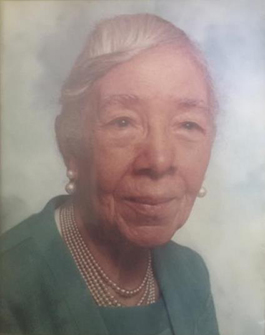
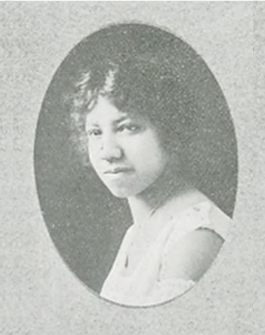
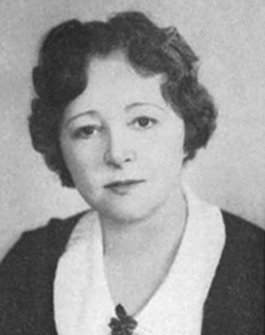
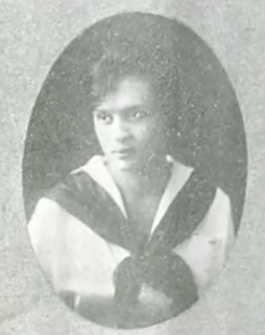
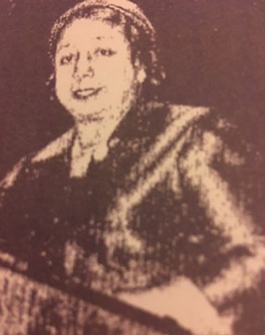
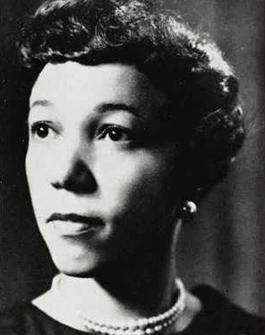
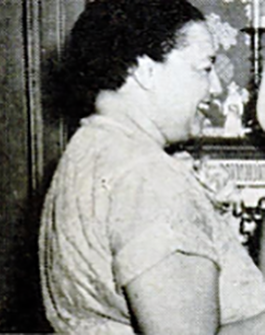
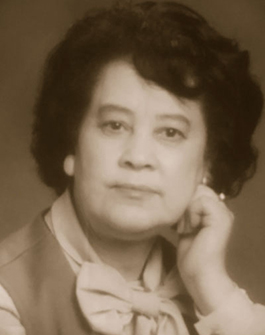
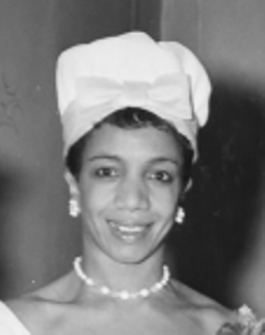
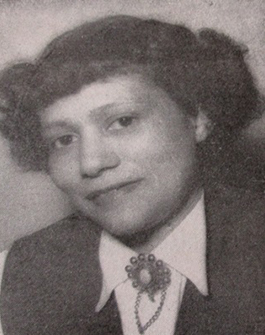
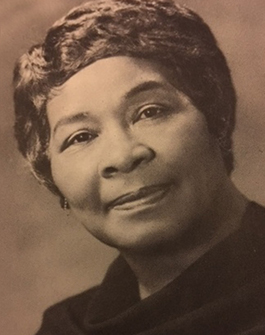
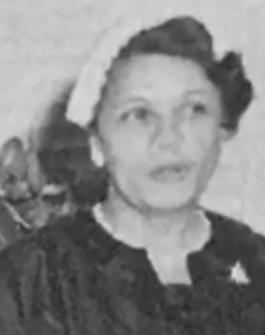
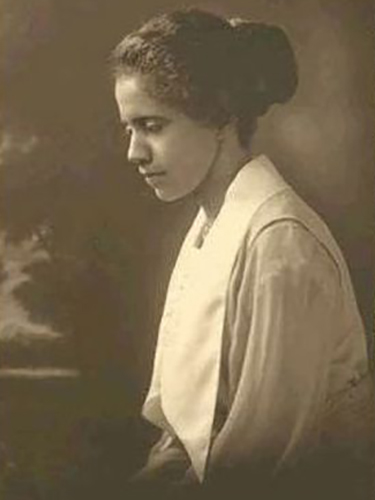
Chartered on February 3, 1921, by nine visionary women, the Washington DC Alumnae Chapter (WDCAC) was established to strengthen connection and build community among members of Delta Sigma Theta Sorority, Inc. living in the nation’s capital. Among these charter members were two of the Sorority’s Founders—Eliza Pearl Shippen and Florence Letcher Toms—and 2nd National President G. Dorothy Pelham Beckley.

Established as Beta Beta—the second graduate chapter of Delta Sigma Theta—the chapter was renamed Beta Sigma in 1925 and became the Washington DC Alumnae Chapter in 1956. From its earliest days, the chapter made a profound impact on the Washington, DC community. The founding members used their talents, education, and determination to serve underserved residents—delivering food and book donations to Freedman’s Hospital (now Howard University Hospital) and offering English tutorial classes. The chapter also enriched the city’s cultural landscape through annual spring plays and its historic Jabberwock program.

In 1921, Delta Sigma Theta launched May Week to highlight the value of higher education for women. WDCAC proudly embraced this national initiative, making it a celebrated and long-standing program. This tradition laid the foundation for what is now the chapter’s Community Forum and Scholarship Program, which continues to champion academic excellence and service in Washington, DC.

Rooted in a legacy of service and sisterhood, WDCAC remains committed to carrying forward the vision of its founders while embracing new challenges and opportunities.

WDCAC’s influence extends beyond its local service footprint. Chapter members have significantly shaped the Sorority’s national leadership, serving as National Presidents, Vice Presidents, Journalists, and National Secretaries. WDCAC is honored to be the home chapter of five Past National Presidents—G. Dorothy Pelham Beckley, Anna Julian Johnson, Helen Elsie Austin, Dorothy Irene Height, and Gwendolyn E. Boyd. 

Notable service initiatives include the National Library Project, pioneered by Past Chapter President Annie Duncan, and civil rights advocacy efforts alongside Honorary Member Mary Church Terrell to challenge segregation in Washington, DC establishments.

Today, with 600 members, WDCAC remains a proud home for service-minded women dedicated to advancing Delta Sigma Theta’s Five-Point Programmatic Thrust—championing causes in Economic Development, Educational Development, International Awareness & Involvement, Physical & Mental Health, and Political Awareness & Involvement—through meaningful, impactful service.

Grounded in its historic mission, WDCAC continues to uplift Washington, DC through service, scholarship, and sisterhood—honoring the past while building a brighter future for generations to come.

CENTENNIAL CELEBRATION VIDEO

In 2021, WDCAC proudly celebrated 100 years of unwavering service, scholarship, and sisterhood. This commemorative video honors a century of transformative impact, showcasing the enduring legacy of Delta Sigma Theta’s steadfast dedication to public service, empowerment, and social change. Explore the remarkable journey of a century marked by purpose, progress, and profound influence.

Charter Members

Chartered February 3, 1921
Beta Beta Chapter

G. Dorothy Pelham Beckley**
Grace Coleman
Landonia Louise Denney
Edith Brinkley Howard
Jennie Baer Shief
Eliza Pearl Shippen*
Elsie Brown Smith
Florence Letcher Toms*
Geraldine “Wilma” Green Williams

* Founder of Delta Sigma Theta Sorority, Inc.
**2nd National President
All charter members are deceased

Leadership

“True leadership is proof that one committed person can turn a moment into a movement, and a community into a force for change.”

Title

past chapter presidents

Meet the past leadership of WDCAC, a group of visionary individuals whose dedication and guidance have shaped our community’s legacy. Their unwavering commitment and inspirational leadership have paved the way for our continued growth and success.

/

Gabrielle Dorothy Pelham Beckley

2nd National President (1923–1926) • Educator • Builder of Lasting Sorority Traditions

Dorothy Pelham Beckley, a native Washingtonian, was initiated into Delta Sigma Theta Sorority, Inc. through Alpha Chapter at Howard University in 1915. A 1918 graduate, she was active in campus life—serving in the World War I campus Red Cross unit, holding student leadership roles, including freshman class secretary (1915), Girls Club treasurer (1915), Girls Athletic Association vice president, track and baseball manager (1916), and charter member of The Stylus literary organization. She later became an educator devoted to service and scholarship.

As the 2nd National President (1923–1926) of Delta Sigma Theta Sorority, Inc., Pelham Beckley strengthened Delta’s organizational structure and expanded its impact. Her administration introduced printed reporting and application forms, published the Delta Bulletin, adopted the Delta Hymn, approved regional conferences, and established Omega Omega as the Sorority’s memorial chapter. She also convened the first Eastern Regional Conference and continued her leadership as Eastern Regional Director (c. 1925–1926).

Pelham Beckley came from a distinguished family. Her father, Robert A. Pelham, Jr., a Michigan-born editor and publisher, led Detroit’s Plain Dealer, a major African American journal. His career included roles as Deputy Oil Inspector for Michigan, Special Agent for the U.S. Land Office, and Inspector for the Detroit Water Department. After he and his wife, Gabrielle Lewis, moved to Washington, DC in 1900, he worked for the U.S. Census Bureau for 37 years, developed and patented a tallying machine, earned a law degree from Howard University in 1904, and later edited the Washington Tribune.

Her mother, Gabrielle Lewis Pelham—an Adrian College alumna and former Director of Music at Howard University (1904–1907)—was one of Delta Sigma Theta’s first Honorary Members and founder of the Detroit Study Club in 1898, which grew into a prominent intellectual, philanthropic, and civic organization that remains active today.

Her sister, Sara Pelham Speaks, was an attorney, a 1944 congressional candidate opposing Adam Clayton Powell, and an active member of Washington DC Alumnae Chapter.

Dorothy Pelham Beckley married Dr. Edgar Randolph Beckley, a Howard University Medical School graduate. They were parents to three sons: Edgar, John, and Charles. Her legacy of leadership, scholarship, and service continues to inspire generations within Delta Sigma Theta and the Washington DC Alumnae Chapter.

Grace Coleman

Alpha Chapter President (1914) • Trailblazer • Scholar • Educator

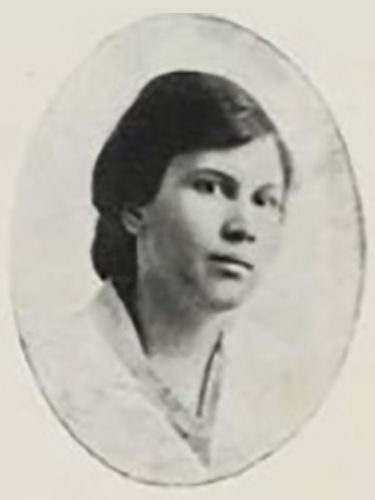
Grace Coleman was a distinguished scholar, educator, and early leader of Delta Sigma Theta Sorority, Inc. A 1910 graduate of M Street High School in Washington DC—predecessor to the historic Dunbar High School—she went on to attend Howard University, where she excelled academically and graduated in 1914 magna cum laude as class valedictorian.

In April 1913, Coleman was initiated on Delta Sigma Theta’s first membership intake line. A trailblazer in Delta Sigma Theta’s early history, she immediately stepped into leadership, serving as the Sorority’s Vice President in 1913 and later being elected Alpha Chapter President in 1914. As a student, she was an active member of the Classical Club, the Deutsche Verein, and served as Secretary of the Class of 1914. The 1914 Howard University Yearbook honored her as “The Most Brilliant” and “The Shortest in the Class,” capturing both her intellectual excellence and spirited presence on campus.

After graduating, Coleman began her career teaching at Dunbar High School. By 1930, her commitment to scholarship and service led her back to Howard University, where she joined the faculty as an English professor.

Grace Coleman was deeply rooted in service to her community. As a member of Shiloh Baptist Church under Rev. J. Milton Waldron and later Rev. Earl L. Harrison, she led the church’s tutorial ministry, offering free academic support to community youth of all backgrounds. Students who completed the program received a $5.00 gold piece as a symbol of their achievement. The church honored her legacy annually through the Grace Coleman Scholarship Award.

She was also connected to two significant figures in Black Greek-letter history: she was the younger sister of Omega Psi Phi Fraternity Inc. Founder Frank Coleman and sister-in-law of Delta Sigma Theta Sorority Inc. Founder Mary Edna Brown Coleman.

Grace Coleman made her home at 1926 Sixth Street NW in Washington, DC, where she continued to exemplify academic excellence, community service, and sisterhood throughout her life.

Landonia Louise Frances Denney

Alpha Chapter Treasurer (1913) • Campus Leader • Educator

Landonia Louise Frances Denney was a dedicated educator and one of the distinguished WDCAC charter members initiated on Delta Sigma Theta’s first membership intake line in April 1913. A graduate of M Street High School in Washington DC—the predecessor of today’s historic Dunbar High School—she completed her secondary education in 1906 before continuing her studies at Howard University.

Denney entered Howard University’s College of Arts & Sciences in 1910 and graduated with the class of 1914, alongside fellow WDCAC charter member Grace Coleman. During her collegiate years, she played an active role in campus life, participating in the Howard University NAACP chapter, the Social Science Club, and the Deutsche Verein Club—reflecting her broad academic and social interests. Her leadership extended into the Sorority as well, where she served as Treasurer in 1913 during Delta Sigma Theta’s earliest organizational period.

After graduating, Landonia Denney devoted her career to education within the Washington, DC public school system. She joined the faculty of Cardozo Senior High School, where she spent many decades shaping the academic and personal growth of her students. By the 1940s, she served as a Speech Teacher at Cardozo and was an active member of the National Association of Teachers of Speech from 1941 to 1945, reflecting her deep commitment to communication, language, and pedagogy.

Throughout her life, Denney embodied the ideals of scholarship, public service, and leadership. Her contributions as a teacher, campus leader, and charter member of the Washington DC Alumnae Chapter continue to stand as a meaningful part of the Sorority’s early history and legacy.

Edith Naomi Brinkley Howard

Alpha Chapter Reporter and Sergeant-at-Arms (1916) • Campus Journalist • Educator

Edith Brinkley Howard was a proud native Washingtonian whose academic excellence and leadership were evident from an early age. A graduate of the esteemed M Street High School—today known as Dunbar High School—she earned a scholarship to Howard University Teachers College in 1912 and completed her degree in 1916.

Howard was initiated into Delta Sigma Theta Sorority, Inc. on November 15, 1913. Her line sisters included several notable women who would become influential in Delta Sigma Theta’s early chapters, including Elsie H. Brown (charter member of WDCAC). As an undergraduate member, she served Alpha Chapter in key leadership roles, including Reporter and Sergeant-at-Arms in 1916.

During her years at Howard University, Howard immersed herself in academic and social organizations. In 1916, she served as a journalist and reporter for the Pestalozzi Froebel Society, was a charter member of Le Cercle Français, and held significant class leadership roles as Class Vice President and Class Journalist in 1916. She was also a member of the Class Yearbook Board, contributing to the documentation of campus life during her graduating year.

Following her graduation from Howard University, Howard continued her commitment to education by pursuing post-graduate studies at Columbia University, where she trained professionally as a teacher. She later worked professionally as an English teacher, reflecting her dedication to language, learning, and the enrichment of youth.

Edith Brinkley Howard’s family legacy is also marked by distinction. She married attorney Edward Williams Howard, and their son, Edward Brinkley Howard, became the 13th African American to graduate from the United States Military Academy at West Point. He went on to complete a 30-year career in the U.S. Army, retiring with the rank of Colonel.

A devoted educator, campus leader, and early member of Delta Sigma Theta Sorority, Inc., Edith Brinkley Howard exemplified scholarship, service, and leadership—values that continue to echo through the Sorority’s history and the many lives shaped by her work.

Jennie Emily Baer Shief

Suffrage March Participant • Campus Leader • Educator

Jennie Baer Shief was born in Pennsylvania and she started her early teaching career in Wrightsville, Pennsylvania before attending Howard University.

Shief’s commitment to advocacy and women’s rights was evident early in her life. Before becoming a member of Delta Sigma Theta Sorority, Inc., she marched with the Founders of Delta Sigma Theta in the historic 1913 Suffrage March, standing with women who would soon shape the Sorority’s legacy. She was initiated into Alpha Chapter in 1914.

During her years at Howard University, Shief became an influential presence across campus organizations. She served as Program Committee Chair of the Deutsche Verein Club in 1914; Vice President of the Pestalozzi-Froebel Literary Society in 1915; Secretary and then President of the Teachers College Culture Club (1915–1916); and Vice President of the Alpha Phi Literary Society. From 1916 to 1917, she further distinguished herself as an associate editor of the Howard University Journal. Shief graduated from Howard University with the Class of 1917.

After graduation, she entered federal service, working as a stenographer and clerk in the U.S. Department of Agriculture. Her commitment to Howard University continued as well—she served as Executive Secretary of the Howard University Alumni Association in 1925, helping keep alumni connected to the institution she loved.

Shief married Ambrose Shief, Jr., a fellow Howard University graduate. By the 1940s, he was employed in the Procurement Division of the U.S. Treasury, and together the couple played an active role in the professional and social life of Washington, DC. Shief maintained a lifelong friendship with Founder Eliza P. Shippen, reflecting her deep and enduring ties to Delta Sigma Theta’s sisterhood.

Jennie Baer Shief’s legacy as an educator, suffragist, campus leader, and devoted Delta Sigma Theta continues to stand as a testament to her commitment to scholarship, service, and community uplift.

Eliza Pearl Shippen

Founder • Educator • Doctoral Scholar

Eliza Pearl Shippen, one of the esteemed Founders of Delta Sigma Theta Sorority, Inc., was born on February 2, 1888, in Washington, DC, to Rev. John M. Shippen, Jr., a Howard University alumnus, and Eliza Spottswood Shippen. A proud native Washingtonian, she excelled academically from an early age. Shippen graduated from the renowned M Street High School in 1904, completed Minor Normal School in 1906 as the top student in her class, and later earned her B.A. magna cum laude from Howard University’s College of Arts & Sciences in 1912.

During her time at Howard University, Shippen was active in campus life through the Teachers’ Club. After graduation, she joined the District of Columbia Public Schools as an educator and, in 1921, began teaching at Miner Teachers College, where she also served as Dean of Women.

Shippen’s pursuit of excellence led her to Teachers College at Columbia University, where she earned a Master’s degree in English in 1928. She continued to break barriers by earning a Ph.D. in English Language and Literature from the University of Pennsylvania in 1944—becoming the only Founder of Delta Sigma Theta Sorority Inc. to earn a doctorate. Her dissertation, “Eugenia de Acton (1749–1927),” focused on the work of writer Althea Brereton Lewis.

When Miner Teachers College was incorporated into District of Columbia Teachers College, Shippen continued her career as an English professor, ultimately serving as Chairman of the Division of English Language and Literature after completing her doctoral studies. She retired in 1954, and her dedication to education was recognized in 1964 with the Teaching Career Award from District of Columbia Teachers College.

Shippen was active in several professional organizations, including the College Alumnae Club, the National Council of Teachers of English, and the Charles Lamb Society. Her life reflected a profound commitment to scholarship, leadership, and public service—values that continue to shape Delta Sigma Theta’s legacy.

Eliza Pearl Shippen passed away on May 17, 1981, at the age of 93 in Hyattsville, Maryland. Her extraordinary academic achievements and contributions to education remain a lasting testament to her pioneering spirit.

Elsie Hetta Brown Smith

English Scholar • Distinguished DC Educator • Advocate for Youth Empowerment

Elsie Brown Smith, born on June 25, 1895, in Washington, DC, came from a distinguished family deeply rooted in education, leadership, and service. The daughter of Sterling N. Brown and Adelaide A. Brown, she was one of six siblings, including her brother, the renowned literary scholar and Howard University professor Sterling A. Brown, and her older sister, Delta Sigma Theta Founder Edna Brown Coleman. Her sister Helen Brown was also an educator, continuing the family’s commitment to academic excellence.

A 1913 graduate of the famed M Street High School, Smith continued her studies at Howard University, earning her bachelor’s degree cum laude in 1917. She furthered her education at the University of Vermont, receiving a Master’s degree in English. On November 15, 1913, she was initiated into Delta Sigma Theta Sorority, Inc. through Alpha Chapter as part of the Fall 1913 line.

As a student at Howard University, Smith was active in several influential organizations. She was a charter member of The Stylus literary group, served as Vice President of the Classic Club in 1915, and participated in the Girls’ Club. These experiences reflected her love of literature, culture, and scholarship.

Her teaching career began at Howard Academy, where she taught History and Acting from 1917 to 1918 alongside her sister Edna, who taught English and mathematics. After earning her Master’s degree, Smith joined the faculty at Dunbar High School in 1918, where she became one of the institution’s most innovative and respected educators. She founded Dunbar High School’s first National Honor Society chapter in 1924, led the Girls Victory Corps during World War II, developed new curricula, incorporated extra-curricular programs into the school year, and integrated arts and humanities programming into her classroom. As advisor to the student discussion group “Let’s Talk it Over,” she guided students through meaningful conversations on issues affecting the school community—most notably school integration. She also taught for eight years at Armstrong High School during her tenure in the DC Public Schools.

Smith’s work extended beyond the classroom. In 1960, she received the prestigious Agnes Meyer Summer Fellowship, which allowed her to travel to India and Burma, broadening her global and cultural perspectives. She retired from Dunbar High School in 1962. During her time at Dunbar, she met and married Walter L. Smith, the school’s principal.

Smith was active in professional and civic organizations, including the International Relations Club of Greater Washington, the American Association of University Women, and the Women’s International Religious Fellowship. She was also a dedicated member of Lincoln Temple Congregational Church.

Elsie Brown Smith passed away on July 10, 1990, in Annapolis, Maryland. She was the last surviving charter member of the Washington DC Alumnae Chapter. Her lifelong commitment to education, community uplift, and intellectual development continues to stand as a powerful part of the chapter’s history and Delta Sigma Theta’s legacy.

Florence Letcher Toms

Founder • Educator • Advocate for Women’s Rights and Civic Leadership

Florence Letcher Toms, one of the Founders of Delta Sigma Theta Sorority, Inc., was a dynamic leader whose vision and activism helped shape the early identity of Delta Sigma Theta Sorority, Inc. Born on May 31, 1892, in Washington, DC, to Henry and Rosetta Letcher, she was the youngest of her parents’ children and showed academic promise from an early age. She graduated from Armstrong Manual Training High School in 1908, where President William Howard Taft presented diplomas to the graduating class. Awarded a scholarship to Howard University, she completed her degree in 1913.

Toms was deeply committed to women’s rights and educational advancement. Reflecting on Delta Sigma Theta’s historic participation in the 1913 Suffrage March, she later stated:
“We marched that day in order that women might come into their own, because we believed that women not only needed an education, but they needed a broader horizon in which they may use that education. And the right to vote would give them that privilege.” This powerful sentiment remains one of the most enduring expressions of Delta Sigma Theta’s early social mission.

After graduating from Howard, Toms began her career as an elementary school teacher and later advanced to the role of Assistant Principal at Garnet-Patterson Junior High School in Washington, DC. Her influence extended far beyond the classroom—one of her students, Rev. Walter Fauntroy, went on to become a nationally recognized civil rights leader and longtime Washington DC delegate to the U.S. House of Representatives.

Toms was a dedicated civic leader, serving on the boards of the Family Welfare Association, the Federation of Parent-Teacher Associations, and the Intercultural Vocation School. Her community service placed her at the forefront of local activism and connected her with national figures, including First Lady Eleanor Roosevelt, whom she had the distinction of introducing at a 1945 event at John Wesley A.M.E. Zion Church.

Committed to lifelong learning, Toms earned her Master’s degree from New York University in 1948. She shared a 48-year marriage with attorney Charles H. Toms, a partnership that endured until her passing on May 30, 1972, at the age of 80.

A pillar of Delta Sigma Theta and a champion of education, social action, and community uplift, Florence Letcher Toms leaves a legacy that continues to inspire generations of Delta women.

Geraldine “Wilma” Paola Green Williams

Honorary Member • 1st President of Washington DC Alumnae (1921) • Educator • Actress

Geraldine P. Green Williams, originally from Mound Bayou, Mississippi, lived a rich academic and artistic life marked by scholarship, creativity, and early involvement in Delta Sigma Theta. Over the course of her life, she used several versions of her name. At Howard University, she appeared in records as Geraldine P. Green; in theatrical productions, she used the stage name Paola Green; and during her active years in Beta Beta Chapter—now the Washington DC Alumnae Chapter—she was known as Wilma Green Williams, reflecting her married name.

Before attending Howard University, Williams completed the rigorous College Preparatory Division at Atlanta University in 1908. She went on to enroll at Howard University, graduating in 1912 with a Bachelor of Arts degree in the same class as Founder Eliza P. Shippen.

Her time at Howard was distinguished by her involvement in the performing arts and academic societies. A talented actress, Williams took on roles in the Dramatic Club, including the character Anne Page in William Shakespeare’s The Merry Wives of Windsor. She also served as Secretary of the Classic Club in 1912, showcasing her leadership and scholarly engagement.

Like the Founders of Delta Sigma Theta Sorority, Inc., Williams was originally a member of Alpha Kappa Alpha Sorority. When Delta inducted its first membership intake line in April 1913, she was received as an Honorary Member, joining the emerging sisterhood that would soon become a leading organization for women committed to public service, academic excellence, and social action.

Geraldine P. Green Williams remains an important figure in Delta Sigma Theta’s early history—a woman whose intellectual curiosity, artistic talent, and early leadership helped shape the Sorority’s foundation.

Past Presidents

ΩΩ Deceased

1. Geraldine [Wilma] Green Williams ΩΩ
1921-1922

2. Jennie Baer Shief ΩΩ
1922-1923

3. Josephine Scott Luck ΩΩ
1923-1924

4. Anna Johnson Julian ΩΩ
4th National President
1924-1926

5. Mamie Wormley ΩΩ
1926-1927

6. Jennie Mustapha ΩΩ
1927-1929

7. Dorothy Robinson Homer ΩΩ
1929-1930

8. Lillian Dodson ΩΩ
1930-1932

9. Evelyn Davis ΩΩ
1932-1934

10. Theodora Daniel ΩΩ
1934-1936

11. Elaine Dean ΩΩ
1936-1938

12. Sabrina Overton Darrell ΩΩ
1938-1940

13. Annie Duncan ΩΩ
1940-1942

14. Ruth Spencer ΩΩ
1942-1944

15. Annette Eaton ΩΩ
1944-1946

16. Naomi Newman ΩΩ
1946-1948

17. Dorothy Shaed Proctor ΩΩ
1948-1950

18. Anna Steen ΩΩ
1950-1953

19. Peggy Hedgepathy ΩΩ
1953-1955

20. Hattye F. Young ΩΩ
1955-1957

21. Ethel Oliver ΩΩ
1957-1959

22. Lillian Hughes Walker ΩΩ
1959-1960

23. Ruth Micheaux ΩΩ
1960-1964

24. Oveta Jewel ΩΩ
1964-1966

25. Alice T. Davis
1966-1968

26. Imogene Robinson Eugene ΩΩ
1968-1970

27. Hattie L. Dorman ΩΩ
1970-1972

28. Barbara M. Stockton ΩΩ
1972-1974

29. Eva B. Speight ΩΩ
1974-1976

30. Maxine H. Jackson ΩΩ
1976-1977

31. June H. Childress ΩΩ
1977-1978

32. Marjorie A. Kinard
1978-1980

33. Barbara Moseley-Davis
1980-1982

34. Olivia V. Aiken ΩΩ
1982-1984

35. E. Jean Christian ΩΩ
1984-1986

36. Gwendolyn E. Boyd
22nd National President
1986-1988

37. Margaret J. Washnitzer
1988-1990

38. Beulah T. Sutherland ΩΩ
1990-1992

39. Yvonne C. McGhee
1992-1994

40. Venida Y. Hamilton
1994-1996

41. Gwendolyne C. Brown
1996-2000

42. Karen Jones Herbert ΩΩ
2000-2002

43. Barnelle R. Herring
2002-2004

44. Barbara Powell Johnson
2004-2006

45. Anntoinette White-Richardson
2006-2008
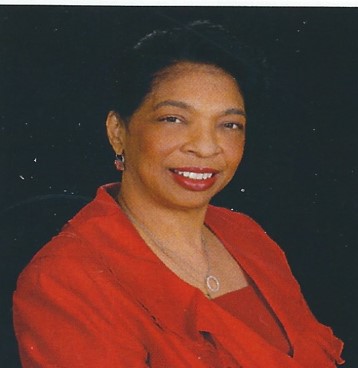
46. Concha Johnson
2008-2010

47. A. Chevelle Glymph Foster
2010-2014

48. Nichelle A. Poe
2014-2018

49. Cherie Brown Jackson
2018-2022
Stay connected with WDCAC. Subscribe for updates on upcoming community activities and events.